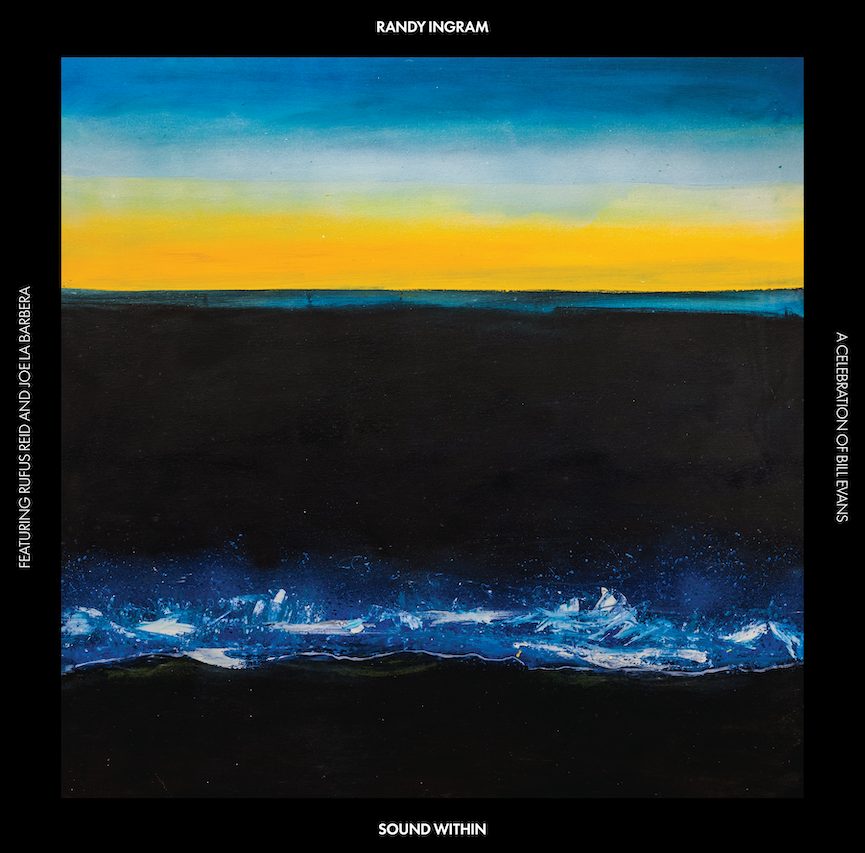
Sound Within: A Celebration of Bill Evans, out July 10, 2026 from Chill Tone Records, features Ingram with Evans trio alumni Joe La Barbera (drums) and Rufus Reid (bass)
“A pianist of taste and resourcefulness.” – Steve Futterman, The New Yorker
Nearly a half century after his death in September 1980, Bill Evans continues to loom large over the jazz piano tradition. It requires a musician with the confidence and strongly defined identity of pianist Randy Ingram to honor Evans while maintaining their own distinctive voice. While he’s known from the beginning of his career that he would one day repay that indelible influence with a project celebrating this legendary forebear, he was determined to wait until the right moment to offer praise and gratitude from one singular artist to another.
That moment has arrived with Sound Within: A Celebration of Bill Evans, Ingram’s deeply personal tribute to Bill Evans. Out July 10, 2026 via Chill Tone Records, the heartfelt homage features songs connected with Evans that resonate in meaningful ways, alongside original compositions penned by Ingram in reflection on the pianist’s profound impact on the music.
“The thing that’s most important to me about Bill Evans is not a style,” Ingram says. “It's not the way that he plays, or the devices that he uses. It's the sound of the piano, and that's something that comes from deep inside. So I made sure to hone in on my own sound for this album.”
Evans famously led some of the most influential and revered piano trios in the history of jazz, beginning with his first, the iconic trio with Scott LaFaro and Paul Motian, and continuing with bassists Chuck Israels and Eddie Gómez and drummers Jack DeJohnette and Marty Morell. So in assembling his own trio to explore the music of his hero Ingram tapped directly into the source. Sound Within features drummer Joe La Barbera, who played in Evans’ final trio with bassist Marc Johnson. La Barbera became a mentor to Ingram during the pianist’s formative years in Southern California, making his involvement a celebration of two integral relationships, generations apart.
The trio is rounded out by the bass master and composer Rufus Reid. While not as intimately associated with Evans as La Barbera, Reid served a brief but crucial stint in the pianist’s trio during 1978, performing engagements at New York’s Village Vanguard and the Jazz Workshop in Boston. As he shared with Ingram, he opted to continue working with Dexter Gordon and J.J. Johnson, but took away an important lesson from the experience. Nervous about following in Eddie Gómez’s footsteps, he was reassured by Evans that he’d been enlisted for his own individual voice, not to imitate someone else’s.
That spirit also informs Ingram’s approach to Evans’s music, which he makes his own by simply expressing the music with a remarkable emotional clarity. “There’s an introspective thread that extends from Bill Evans through a lot of the music that I love,” Ingram says. “He was never faking anything on an emotional level; he was always able to speak who he was with total honesty. The way that I connect to Bill's music is through finding something undeniably true there. We live in an age where people seem to feel pressured to present themselves through curated external fronts, and I really appreciate someone like Bill who created something deeper, something that's real and that comes from more of an interior perspective.”
“Everything about Ingram’s music is completely self- assured and big, creating extended aural landscapes that
envelop and excite, soothe and invigorate.” - Bud Koopman, All About Jazz
Ingram has not only studied Evans’s music, but has embodied the pianist on screen. He portrayed Evans in the 2013 Swedish film Waltz for Monica (aka Monica Z), a biopic of the singer and actress Monica Zetterlund that became the year’s highest grossing film in its home country and garnered several awards.
Sound Within opens with the Evans classic “Turn Out the Stars,” Ingram setting the contemplative tone for the album with a short solo introduction before La Barbera and Reid enter with a tender yet vigorous rhythm in 5/4, placing the oft-reprised tune on a subtly challenging footing. It’s followed by the timeless “My Foolish Heart,” its lovely melody complicated by an unexpectedly tumultuous groove. The song, and Evans’s memorable take on it, was one of the pillars of the album in Ingram’s view.
“That has been a very important song for me for a long time,” he explains. “I remember driving home from high school, when I probably should have been blasting Pearl Jam. But I had Waltz for Debby in the car stereo and would just sit there pressing repeat on the CD to hear ‘My Foolish Heart’ again because it was just so beautiful.”
George Rusell’s “Ezz-Thetic” was featured on the groundbreaking composer’s 1957 debut, The Jazz Workshop, with Evans on piano. Its inclusion allowed Ingram to extend his celebration to another key influence and mentor, as he studied with Russell during his years at New England Conservatory. (The trio’s rendition also shines a spotlight on La Barbera’s blistering virtuosity.) “In the NEC Big Band,” Ingram recalls, “George historically wanted the piano players to draw their cues from the original Bill Evans performances, which was a great learning experience for me. So ‘Ezz-Thetic’ is in some ways a tribute to George Russell, but very much tied into my journey with Bill.”
Composed for Evans’s son, “Letter To Evan” also has a personal connection for Ingram, himself the father of a young son. Ingram’s unaccompanied opening on “For All We Know” is so mesmerizing that it comes as something of a shock when his bandmates make their presence known. Ingram was inspired to arrange “Mother of Earl” while on a composition residency at MacDowell, when he discovered that the composer Earl Zindars, a lifelong friend of Evans, had previously stayed in the same cabin.
Ingram’s three original compositions examine Evans’s influence from a variety of different perspectives. The transportive “Aloft” is a free-floating marvel along the lines of “Very Early,” gliding on the pianist’s delicate touch. The title track distills the central concept of the album into a resonant piece that follows Evans’s influence through the wide-open sounds of composers like Kenny Wheeler and the corpus of ECM Records. “Remembrance” closes the set on an aching, elegiac note, mourning the loss of one of the music’s most towering figures.